
On this Jewish holiday of Shavu’ot (Pentecost) many modern Jewish congregations, seeking a way to popularize what is likely the least observed holiday in Judaism, have revived an ancient custom of engaging in the study of religious texts all night long. Ironically, this custom is first known to have been assigned to Passover (it is mentioned in the Haggadah), but Lord knows we have enough to do on Passover, so why not move it to Shavu’ot?
And this being modern Judaism, many congregations hoping to attract people to this convocation named in Hebrew Tikkun Leil Shavu’ot have shortened it to a couple of hours. That said, my congregation asked me to prepare a short study for the occasion, and I chose to do it on Ruth, a book which has been liturgically assigned to the holiday of Shavu’ot.
Ruth is a fascinating book, and for such a short one (just four chapters), contains more than its fair share of mysteries. Here, I’ll just mention one of them. The author of Ruth seems to have no idea about the rules of the Torah, especially the book of Deuteronomy! Ruth is the childless wife of a Judean man named Mahlon, son of Naomi and Elimelech. Mahlon (whose very name means “sickness” in Hebrew!) dies, and Ruth chooses to leave her homeland of Moab and return to Judea with her mother-in-law, Naomi.
Ruth, with some romantic scheming by Naomi, attracts the attention of a wealthy Judean named Boaz and Boaz desires to marry her. But, as the story goes, he is unable to effectuate a marriage at first because there is a kinsman of Elimelech and Naomi who has a closer claim on her. This is apparently a reference to the institution of Levirate marriage which is also described at some length in Deuteronomy 25. The idea is that the land assigned to the various tribes in the Holy Land would be preserved as best as possible to the members of the tribe. If a married brother died childless, his brother (normally forbidden to marry a sister-in-law because of incest) would in a sense inherit the wife and the first son produced by this marriage would carry on the deceased brother’s name and title to the land. A procedure is described in both Ruth and Deuteronomy whereby a brother could renounce this obligation.
The story told in the book of Ruth could have been a brilliant illustration of the Torah law quoted in Deuteronomy, but there are some catches. Perhaps the most important one is that Deuteronomy clearly describes a procedure whereby the widow becomes free of obligation to the family and can marry anyone else. But according to the book of Ruth, Ruth isn’t free, but rather becomes eligible for marriage to another relative! Of course as the story goes, this is exactly what Ruth (and Naomi) desire, but that simply isn’t the law according to Deuteronomy. In fact, she might even be forbidden to Boaz on account of that incest issue. And if that weren’t enough, Deuteronomy (23:3) states that all Israelites are forbidden to marry Moabites! The rabbis finesse this issue in the Middle Ages by saying the law only applies to Moabite men, but that is a story for another day.
As the story proceeds, Ruth and Boaz live happily ever after and the line descended from them includes none other than King David, which makes David, at least in part, Moabite!
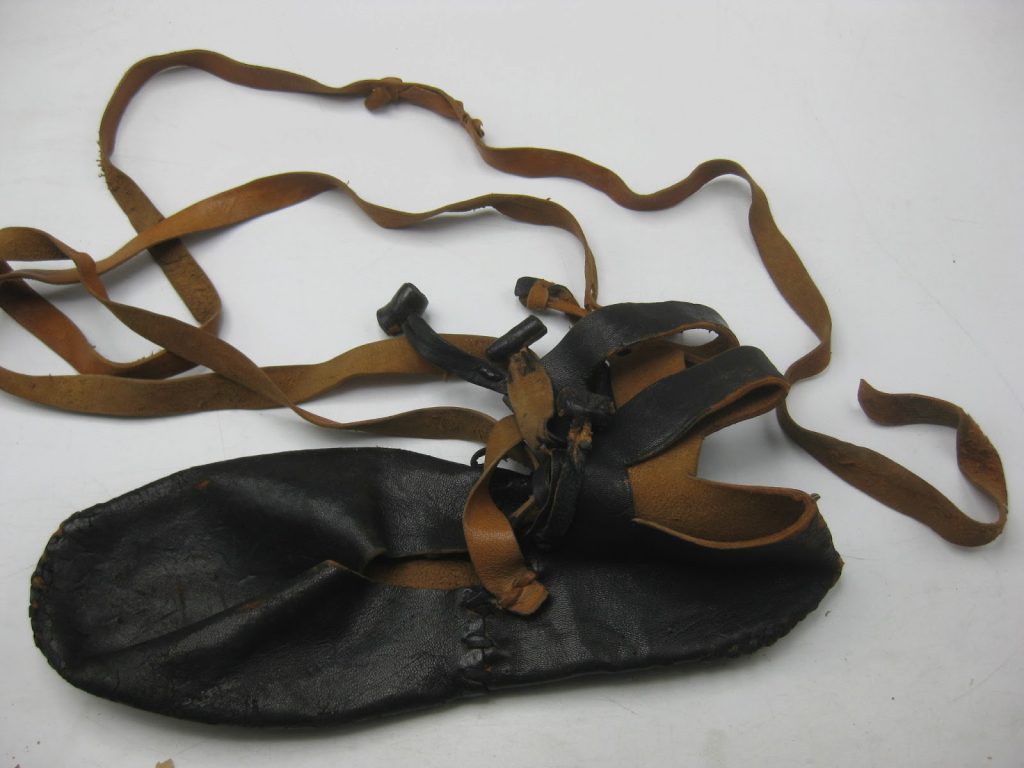
It is fair to say that the author of Ruth did not know the book of Deuteronomy, and his (or her) knowledge of the custom of levirate marriage differed considerably from that described by the Torah. But at least they all agreed about one thing: to make this all legal, someone had to take off a shoe!
Happy Pentecost!
One Response
Hi Jack: I enjoy and learn from your postings. I have always found Ruth a powerful text. A quick point: as to the Book of Ruth’s ignorance of Deuteronomy there is a serious body of scholarship that predates the narrative of Ruth some centuries before Deuteronomy. I suspect you may know this but in light of your post, I thought it worth mentioning.