Our Talmud discussion group is examining the tractate Bekhorot at this time, last night we studied page 19. The tractate in general concerns dealing with the requirement of the Torah that we support the priesthood in part via allocating the first-born of livestock to their livelihood. In the case of human beings, a ritual was created in which a family redeems their first born son via a payment of some sort.
In almost all cases, what might seem like a fairly simple requirement turns out to be quite difficult in its execution. The tractate deals with a multitude of complexities such as categories of livestock that might be subject to the requirement, determining whether a birth is really the first born or not, dealing with livestock that might have been purchased from non-Jews and much more.
As often happens the Talmud, which is not a law code and is not organized like one, the discussion veers off on some tangent–and part of the fun of studying the Talmud is going along on that ride. On page 19, the text suddenly becomes concerned with the institution of Levirate marriage.
What is Levirate marriage? The basic text is found in Deuteronomy 25:5-9, which I will quote here from the JPS translation:
When brothers dwell together and one of them dies and leaves no son, the wife of the deceased shall not be married to a stranger, outside the family. Her husband’s brother shall unite with her: he shall take her as his wife and perform the levir’s duty. 6 The first son that she bears shall be accounted to the dead brother, that his name may not be blotted out in Israel. 7 But if the man does not want to marry his brother’s widow, his brother’s widow shall appear before the elders in the gate and declare, “My husband’s brother refuses to establish a name in Israel for his brother; he will not perform the duty of a levir.” 8 The elders of his town shall then summon him and talk to him. If he insists, saying, “I do not want to marry her,” 9 his brother’s widow shall go up to him in the presence of the elders, pull the sandal off his foot, spit in his face, and make this declaration: Thus shall be done to the man who will not build up his brother’s house!
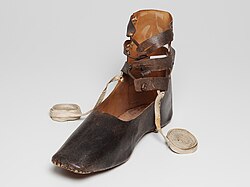
This passage explains the term levir to mean the brother of the deceased sibling. He (and the rule applies only to males) has an obligation to that brother, and this is a case where the Torah actually explains the reason: that his name may not be blotted out in Israel. The passage reflects the ideology of preserving the tribal structure and territorial integrity of those tribes in the Promised Land. Rather than completely mandating the marriage, the Torah provides an escape clause. By performing a ritual, the brother can escape his obligation. It is clear that the ritual is intended to be demeaning and humiliating in order to discourage the brother from denying his brother a progeny to inherit his share of the land. The ritual, which even today involves removing a ceremonial shoe, is called halizah from the Hebrew “to draw off (a shoe).”
But why is this passage even part of the discussion in Bekhorot? I think this one is pretty easy to understand. If the levir performs his duty, is the child first-born requiring redemption from the priest even if the levir already has children?
In the course of the discussion of this halizah ritual, the Talmud makes the statement, “and we put a woman on a level with a man in this respect.” Not to act as a levir, of course, it’s a different issue. But this is a rare case where the Talmud deals with a gender issue by finding women obligated in the same way as men, and it is a comment which can be used in discussions of gender issues in modern Judaism.
All in all, a pretty interesting discussion for our group!